
Immersive training
How to scope immersive training for safety-critical operations
Published 21 July 2026
7 minute read
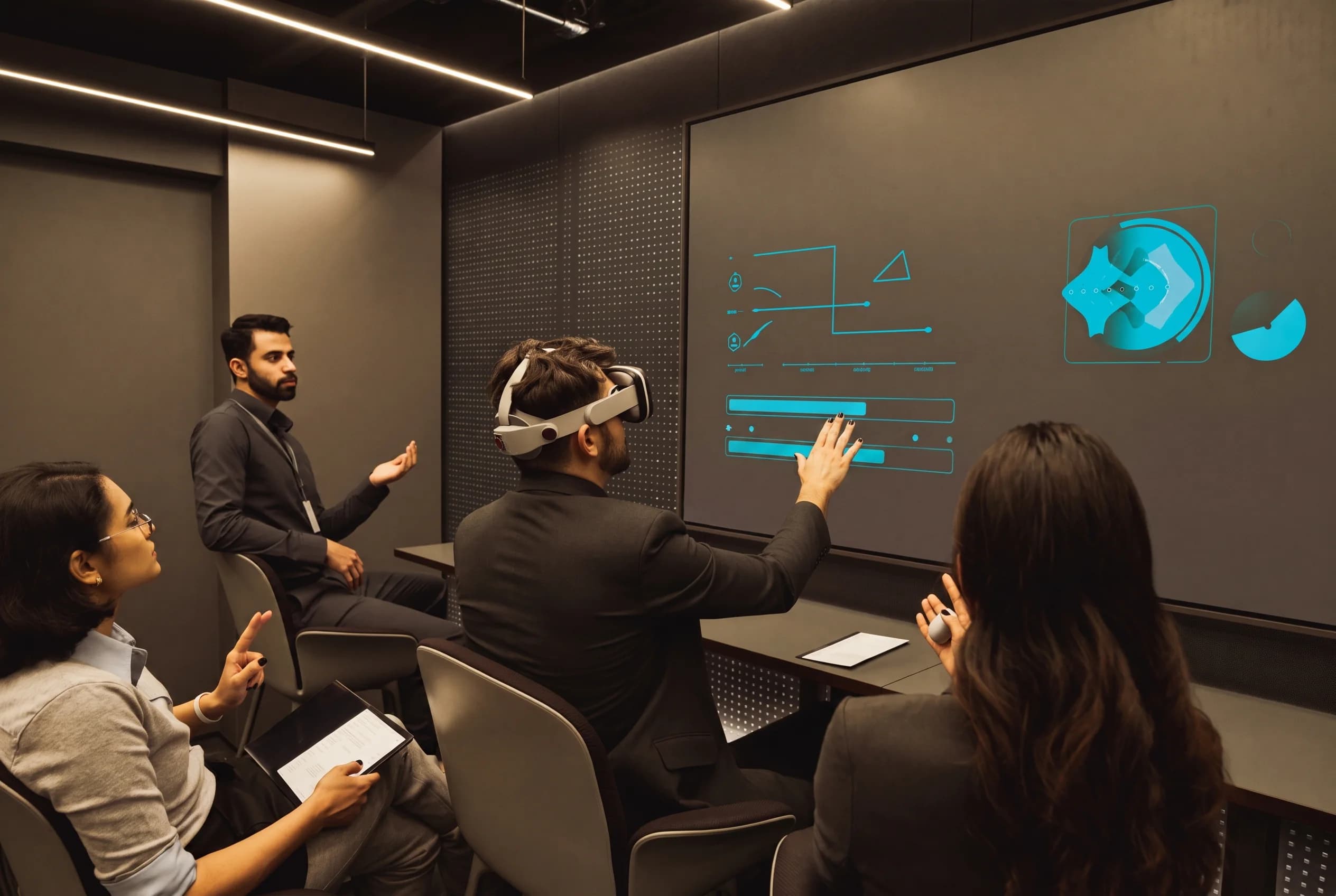
Immersive training succeeds when it reproduces the decisions, sequence and pressure that matter. Reproducing the appearance of a workplace is not enough. A useful scope begins with competence and operating context, then works toward technology.
01
Begin with the capability gap
A request for a VR simulation often arrives after a technology demonstration. The more useful starting point is the capability gap: what people cannot practise safely, consistently or frequently enough today. This may be an emergency response, a maintenance sequence, equipment familiarisation or a team decision under pressure.
Define the observable behaviour that should improve. 'Understand the procedure' is difficult to assess. 'Identify the isolation points in the correct order and respond appropriately to an abnormal condition' can be designed, observed and reviewed.
- Who performs the task and under what conditions?
- Which decisions, actions and communications matter?
- What makes the current training insufficient or risky?
- What evidence would demonstrate improved readiness?
02
Choose fidelity deliberately
Fidelity should follow the learning objective. Visual realism is valuable when spatial recognition, hazard identification or equipment orientation matters. It is less important when the primary goal is communication, prioritisation or a procedural decision.
High fidelity also creates obligations: more content to validate, greater device requirements and more effort to maintain. The right question is not how realistic the experience can become, but which aspects of reality must be represented accurately for the training decision to remain valid.
03
Select the right immersive medium
VR is effective when the learner needs a controlled, fully simulated environment. AR is useful when guidance or information must remain connected to a real asset or location. MR supports interaction with spatial content while preserving awareness of the physical environment. Desktop 3D can also be the correct choice when access, scale or supervision matters more than embodiment.
Treat the device as one part of the delivery model. Consider session length, hygiene, field conditions, available space, accessibility, supervision, content updates and whether the programme must reach many locations.
04
Design assessment with the scenario
Assessment should not be added after the experience is built. Decide what the system will observe, which actions represent competence and where human judgement remains necessary. Completion, speed and error counts can help, but they rarely tell the whole story.
For complex work, combine system evidence with instructor observation and after-action review. Learners should understand what happened, why it mattered and what to practise next. If AI is used to interpret performance, its recommendations should remain explainable and reviewable by accountable people.
05
Plan for operations, not only launch
A training system becomes an operational capability only when ownership, support, content governance and adoption are defined. Identify who can update procedures, who approves scenario changes, how devices are managed and how performance data is handled.
A representative prototype should retire the most important uncertainty. It might test interaction with gloves, multi-user coordination, spatial accuracy or whether assessment evidence is useful to instructors. Proving the riskiest assumption creates a stronger route to production than demonstrating the easiest scene to build.
Working takeaway
Scope immersive training around observable capability, representative context and operational ownership. Select VR, AR or MR only after those requirements are clear.